
Achieve a Functional Smile with Implant-Supported Bridges in Willoughby Hills
 Losing more than one tooth can feel like more than just a gap in your smile. It can change the way you eat, speak, and even feel about yourself in everyday conversations. If you’ve been researching ways to replace several missing teeth without settling for a bulky, removable appliance, an implant-supported bridge might be exactly what you’re looking for.
At Smile Brighter, your implant dentist in Willoughby Hills, Dr. Phillip Wallace helps patients throughout Lake County rebuild strong, natural-looking smiles with this permanent, comfortable solution. If you’re ready for a fully functional smile, schedule your implant-supported bridge consultation by calling (440) 210-0999.
Why Local Willoughby Hills Patients Choose Dr. Wallace
When it comes to a procedure as important as an implant-supported bridge, experience and trust matter. That’s why so many patients throughout Willoughby Hills and Lake County choose Dr. Phillip Wallace at Smile Brighter:
- Prosthodontic Expertise – As a prosthodontist in Willoughby Hills, Dr. Wallace has advanced, specialized training in tooth replacement and full-mouth restoration, exactly the kind of expertise implant-supported bridges call for.
- A Neighborhood Practice – Smile Brighter has built lasting relationships with families throughout Willoughby Hills and the surrounding communities, so patients see a familiar, trusted face at every visit rather than a rotating cast of providers.
- Personalized Treatment Plans – No two smiles are alike. Dr. Wallace takes the time to understand each patient’s needs, health history, and goals before recommending a plan, rather than offering a one-size-fits-all solution.
- Comfort-Focused Care – From the first consultation through your final bridge placement, our team prioritizes clear communication and patient comfort, so you always know what’s happening and why.
- Convenient, Local Access – Patients don’t have to travel into Cleveland for specialized prosthodontic care. Dr. Wallace brings that same level of expertise right here to Willoughby Hills.
For patients searching for a Willoughby Hills dentist who treats them like a neighbor and not just a number, Dr. Wallace and the Smile Brighter team are proud to be that trusted local choice.
What Is an Implant-Supported Bridge?
A traditional dental bridge relies on your natural teeth for support, which means healthy teeth often have to be filed down to hold the bridge in place. An implant-supported bridge takes a different approach. Instead of resting on your existing teeth, it’s anchored directly into your jawbone using two or more dental implants, small titanium posts that act like artificial tooth roots. The bridge itself, a row of custom-made replacement teeth, is then secured on top of those implants.
The result is a restoration that looks natural, feels sturdy, and doesn’t put any strain on your remaining healthy teeth. It’s a popular option for patients missing three or more teeth in a row, and it can even be used to replace a full arch of teeth in some cases.
Why Patients Choose Implant-Supported Bridges
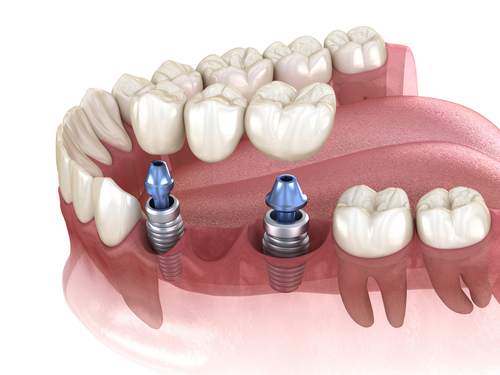 There are a lot of tooth-replacement options out there, so it’s worth understanding what makes this one stand out:
- No Impact on Healthy Teeth – Because the bridge is supported by implants rather than adjacent teeth, your natural teeth stay untouched.
- Bone Preservation – Dental implants stimulate the jawbone the same way natural tooth roots do, helping prevent the bone loss that often follows tooth loss.
- Stability You Can Trust – Unlike removable dentures, an implant-supported bridge doesn’t shift, slip, or click when you talk or eat.
- Long-term Value. With good care, implant-supported bridges are designed to last many years, making them a smart long-term investment in your oral health.
- A Natural Look and Feel – Custom-crafted to match your bite and smile, most patients say it feels just like having their own teeth back.
Am I a Good Candidate for an Implant-Supported Bridge?
Most adults missing several teeth in a row are candidates for an implant-supported bridge, but a few factors help determine whether it’s the right fit for you:
- Jawbone Density – Since implants are anchored directly into the jaw, you’ll need enough healthy bone to support them. If bone loss has occurred, a bone graft can often build up the area so treatment can move forward.
- Gum Health – Healthy, infection-free gums give implants the best chance to heal properly and stay stable long term. Any active gum disease is typically treated first.
- Overall Health – Conditions like uncontrolled diabetes or a history of heavy smoking can affect healing, so Dr. Wallace will review your health history as part of the evaluation.
- Number of Missing Teeth – This treatment is especially well suited to patients missing three or more consecutive teeth, though it can also be adapted for a full arch in some cases.
The only way to know for certain is a one-on-one evaluation. Dr. Wallace will review your dental X-rays, examine your jawbone and gum health, and talk through your goals to determine whether an implant-supported bridge, or another restorative option, is the best path forward for you.
Curious if you qualify? Book a candidacy evaluation with Smile Brighter by calling (440) 210-0999 to get clear answers from Dr. Wallace.
What to Expect During Treatment with Dr. Wallace
 Every patient’s mouth is different, so Dr. Wallace starts with a thorough consultation and imaging to map out a treatment plan tailored to you. In general, the process includes:
- Consultation and planning: Dr. Wallace evaluates your jawbone density, gum health, and bite to determine the best placement for your implants.
- Implant placement: The implants are surgically positioned in the jawbone, where they’ll need a few months to fuse with the bone (a process called osseointegration).
- Healing period: During this time, a temporary restoration may be provided so you’re never without a functional, presentable smile.
- Custom bridge placement: Once healing is complete, your permanent, custom-made bridge is attached, and your bite is fine-tuned for comfort.
Throughout the process, our Willoughby Hills team focuses on keeping you comfortable and informed at every step.
Frequently Asked Questions
Implant-supported bridges can last a lifetime, but their lifespan depends on factors such as the quality of the dental implant, the patient’s oral hygiene routine, and overall health. Regular dental checkups and cleanings must be scheduled to help increase the longevity of your implant bridge.
There’s no age limit for implant-supported bridges. However, implant bridges aren’t a treatment option normally recommended for patients whose jaws are still developing. Older patients may have a lower jawbone density, which can affect the success of the implant. In these cases, implant-supported bridges aren’t always the best treatment option for replacing missing teeth.
In general, an implant bridge can replace anywhere from two to six missing teeth in a row. If a patient has more than six missing teeth in a row, multiple dental implant-supported bridges or other tooth replacement options may be needed to fully restore their smile. The number of dental implants needed to support the bridge will also depend on the number of missing teeth being replaced.
Restore Your Smile with Our Trusted Willoughby Hills Implant Dentist
Replacing missing teeth isn’t just about aesthetics. It’s about restoring your ability to eat comfortably, speak clearly, and smile without hesitation. An implant-supported bridge from Smile Brighter offers a stable, natural-looking, long-term solution designed around your unique needs. Dr. Phillip Wallace and our Willoughby Hills team are ready to help patients from across Lake County, including Willoughby, Wickliffe, Kirtland, Mentor, and Eastlake, get back to smiling with confidence.
Don’t wait to reclaim your smile. Contact your Willoughby Hills dentist by calling (440) 210-0999 to schedule your implant-supported bridge consultation.